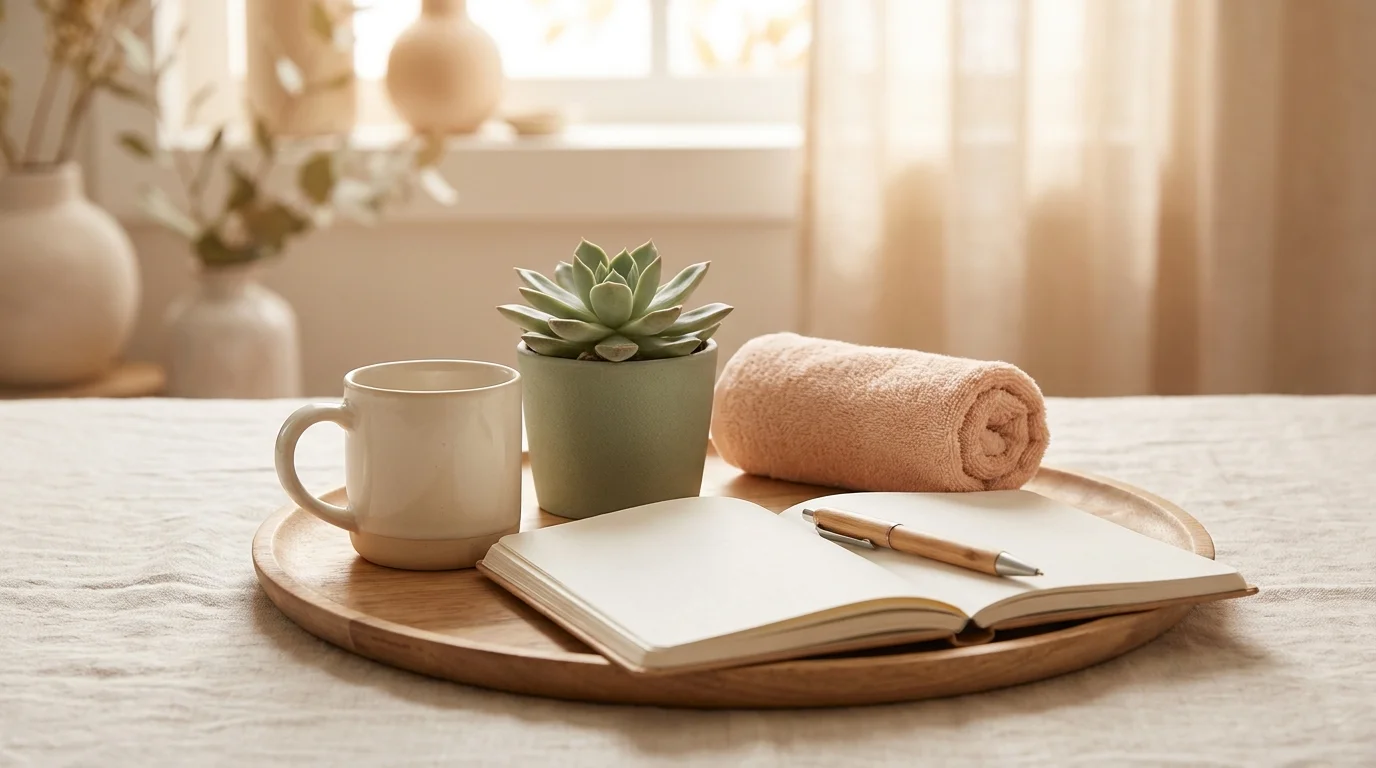
If you have ever typed "best self-care app" into a search bar at midnight while feeling a little burnt out and a lot overwhelmed, this one is for you. You are not looking for another productivity tracker or a streak-obsessed habit app that guilt-trips you the moment you miss a day. You are looking for something that actually feels good to open. Something that meets you where you are, even on the days when "where you are" is curled up under a blanket, not doing much at all.
This is your guide to understanding what a genuinely supportive self-care app looks like, what features are worth your time, and how to build a daily ritual around it that actually sticks.
Why Most Self-Care Apps Miss the Mark
The wellness app market is huge right now, and that is both a blessing and a problem. There are hundreds of options, but so many of them are built on the same flawed assumption: that you need more pressure to take care of yourself. More notifications. More data. More goals to hit.
Real self-care does not work like a fitness leaderboard. It is quieter than that. It is the two minutes you spend writing down three things you are grateful for before your coffee goes cold. It is the gentle check-in that reminds you to breathe, not because you failed at something, but because you deserve a moment.
"The best self-care tool is the one you actually want to return to, not the one that makes you feel guilty for leaving."
When an app is built with warmth and intentionality, it becomes less of a task and more of a ritual. That shift changes everything.
What to Actually Look For in a Self-Care App
Before downloading anything new, it helps to get clear on what you actually need. Not what you think you should need, but what would genuinely feel supportive right now. Here are the features worth prioritising.
1. Mood Tracking That Feels Human
A good mood tracker does not just ask you to rate your day on a scale of one to ten. It invites you to name what you are feeling, notice patterns over time, and sit with your emotions rather than rank them. Look for an app that uses warm language and gives you space to reflect, not just record.
Over a few weeks, mood tracking becomes genuinely useful. You start to notice that Tuesdays feel harder, or that your energy dips after certain kinds of interactions. That awareness is quiet power.
2. Journaling Prompts That Go Deeper
A blank page is beautiful in theory and paralyzing in practice. The best self-care apps offer thoughtful journaling prompts that help you move through what you are carrying without feeling like therapy homework.
Good prompts are specific enough to spark something, but open enough to go wherever you need. "What felt heavy today, and what can you set down?" is infinitely more useful than "Write about your day."
3. Affirmations That Do Not Feel Forced
We know, we know. Affirmations have a reputation. But when they are written with nuance and honesty, they genuinely shift how you start your day. The trick is finding affirmations that feel true, or at least like something you are growing into, rather than hollow phrases plastered over your problems.
A great self-care app will rotate affirmations thoughtfully, or better yet, let you write your own and return to them when you need a reminder of who you are becoming.
4. Gratitude That Is Gentle, Not Performative
Gratitude practice has real roots in positive psychology, but it can tip into toxic positivity fast if an app pushes it too hard. What you want is a gratitude feature that allows for nuance. You can be grateful for your morning tea and also be having a genuinely hard week. Both things are true. The best apps make space for that.
5. Challenges That Feel Encouraging, Not Exhausting
Wellness challenges can be wonderful when they are bite-sized and kind. A seven-day self-love challenge, a week of evening wind-down rituals, a five-day gratitude sprint. These work because they give you structure without demanding perfection. One missed day should not undo the whole thing.
- They meet you with warmth, not pressure or guilt
- They combine mood tracking, journaling, and affirmations in one place
- They encourage consistency without punishing imperfection
- They feel beautiful to open, because aesthetics matter for habit-forming
- They offer structure through prompts and challenges without being rigid
- They grow with you, so what you need in winter can look different from what you need in summer
How to Build a Real Daily Self-Care Ritual Around an App
The app is just the container. The ritual is what you pour into it. Here is how to actually make it a part of your day rather than something you open once and forget.
Anchor It to Something You Already Do
Habit science calls this "habit stacking," and it is one of the most effective ways to make something stick. Instead of trying to build a brand-new habit from scratch, attach your self-care practice to something that already happens every day. Your morning coffee. The moment before you open your work emails. The ten minutes after you brush your teeth at night.
When your app becomes associated with a moment you already own, it stops feeling like another thing to remember and starts feeling like part of your rhythm.
Start Smaller Than You Think You Should
Three minutes counts. One journal prompt counts. A single affirmation read softly in your head while you wait for the kettle to boil absolutely counts. The goal is not a 45-minute self-care marathon every morning. The goal is showing up for yourself in a way that is sustainable, especially on the hard days.
If you can do three minutes consistently, that is worth infinitely more than an hour done once and then abandoned.
Use the Evening as Gently as the Morning
So much wellness content is focused on morning routines, but your evening ritual matters just as much. A quick mood check-in, a gratitude note, or a single journal prompt before bed can help you actually process your day instead of carrying it into tomorrow. It also signals to your nervous system that the day is done, which is a gift you can give yourself every night.
Let the App Prompt You, Not Control You
Notifications can be your ally or your enemy depending on how you set them up. A single gentle reminder at a time that works for you is supportive. Six push notifications scattered through your day is noise. Go into your settings and make the app work for your life, not against it.
A Note on Aesthetics (Because They Actually Matter)
This might sound shallow, but it is genuinely not. Research on habit formation consistently shows that we are more likely to return to things that feel good. An app that is beautiful, calm, and considered in its design is one you will actually want to open. Soft colours, clean layouts, and thoughtful typography are not just nice to look at. They create an environment that says "this is your space, and it is safe here."
When you open an app and it feels like a breath of fresh air rather than a to-do list, you have found something worth keeping.
The Bigger Picture
The best self-care app is not the one with the most features or the highest rating in the app store. It is the one that makes you feel supported, seen, and gently encouraged to keep going. It is the one that fits into your actual life, not a Pinterest-perfect version of it.
Self-care is not a luxury or a trend. It is the quiet, consistent act of choosing yourself again and again, especially on the days when it feels hardest. A good app does not do that work for you. But it holds the space, hands you the prompts, and reminds you that you are worth the five minutes.
That is the kind of support worth looking for.